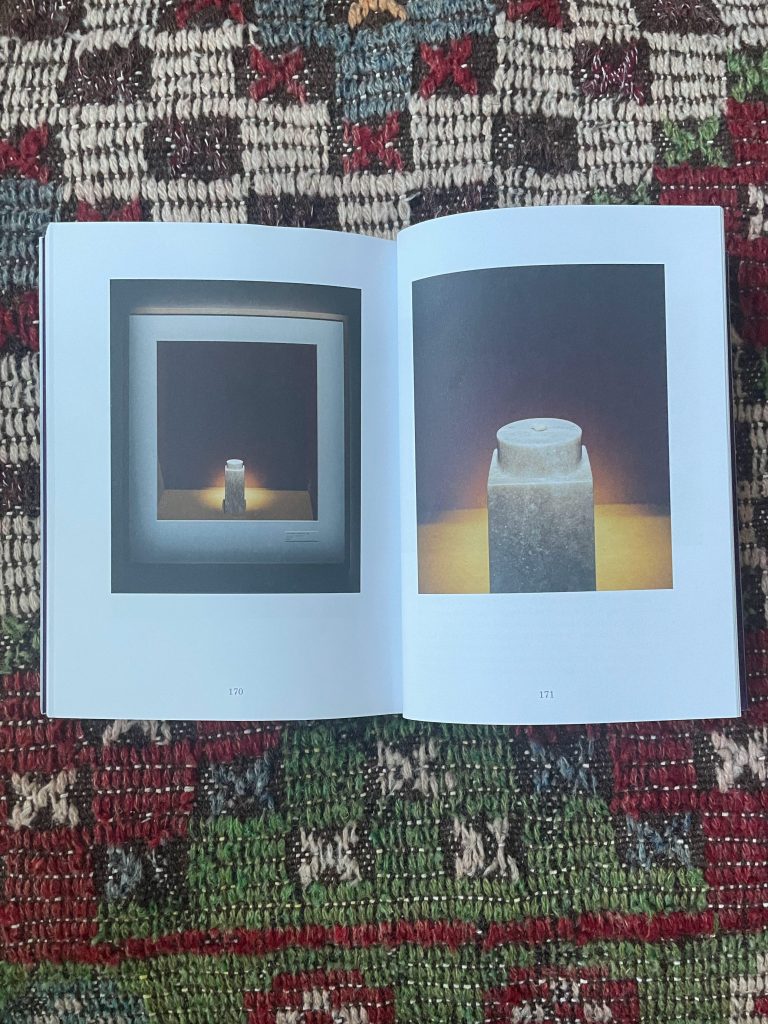
Standing before the branching columns of a cathedral can be awe-inspiring, but the queuing can be awful. If you’ve ever seen the ocean, or a mountain, or a tiger, you will know the feeling of awe: a mixture of terror and reverence. For a long time, I have been in awe of Nina Simone. Her music feels dangerous—anything might happen, and it terrifies me. Dr Simone walked onstage in London, for the final time, chewing a piece of gum with a Zimmer frame and a scowl. Her chilling performance left the audience totally confounded. As she quit the stage and the room began to clear, musician Warren Ellis jumped up and took the gum that Nina had left in a towel beside the piano. That piece of gum is now locked behind glass, atop a marble plinth, inside a case lined with velvet—an exhibition piece in the collection curated by Ellis’ friend and colleague, Nick Cave.
We use the word curation when referring to the act of selecting, organising, and overseeing objects. The noun’s Latin root cura, meaning ‘care’, followed a path through Old French into Middle English where a parish priest came to be known as a curate: ‘one who cares for souls’. The same root develops into the verb curare, meaning ‘to administer medical care and attention’—‘to heal’, ‘to cure’. Belonging to this concept ‘curation’, therefore, are the roles of both doctor and priest; to be a true ‘curator’ is to tend both the body and soul. Ellis kept the gum safe for twenty years: the centrepiece of private shrines raised to his heroes. Returning Nina’s gum to the public, he stood back to watch others react with the same careful attention—the same awe—with which he had been inspired. It produced feelings that took hold of people, “creating a life of its own.” A small community of conservators and artists began to gather around the gum, working hard to honour and protect its curious intimacy. Ellis wonders whether his possession of the gum had been his secret to success in the studio. The gum was “bringing out the best in people”—it was an inspiration.
The term ‘inspire’, in a literal sense, means ‘to blow upon or into’, but more commonly it is used figuratively to mean the infusion of a thought or feeling. Over time, the Latin spirare, meaning ‘to breathe’, has come to refer metaphorically to the life force or essence of a person, hence our word ‘spirit’. The idea of inspiration being divine, makes reference to the image of God breathing the Spirit into a lifeless body. Nina’s gum lay lifeless, as trash tossed into a towel, but at the touch of careful attention it turned into something sacred. Ellis ‘inspired’ the gum—he gave it a spirit. Dr Simone has since left her gum chewing body, but her gum preserves a piece of her soul. Ellis writes: “I’d never even touched it with my fingers. Nina Simone’s fingers were the last to touch it. Her mouth and teeth and tongue. Her spirit existed in the space between the gum and the towel. That concert was in the gum. That transcendence. That transformation.”
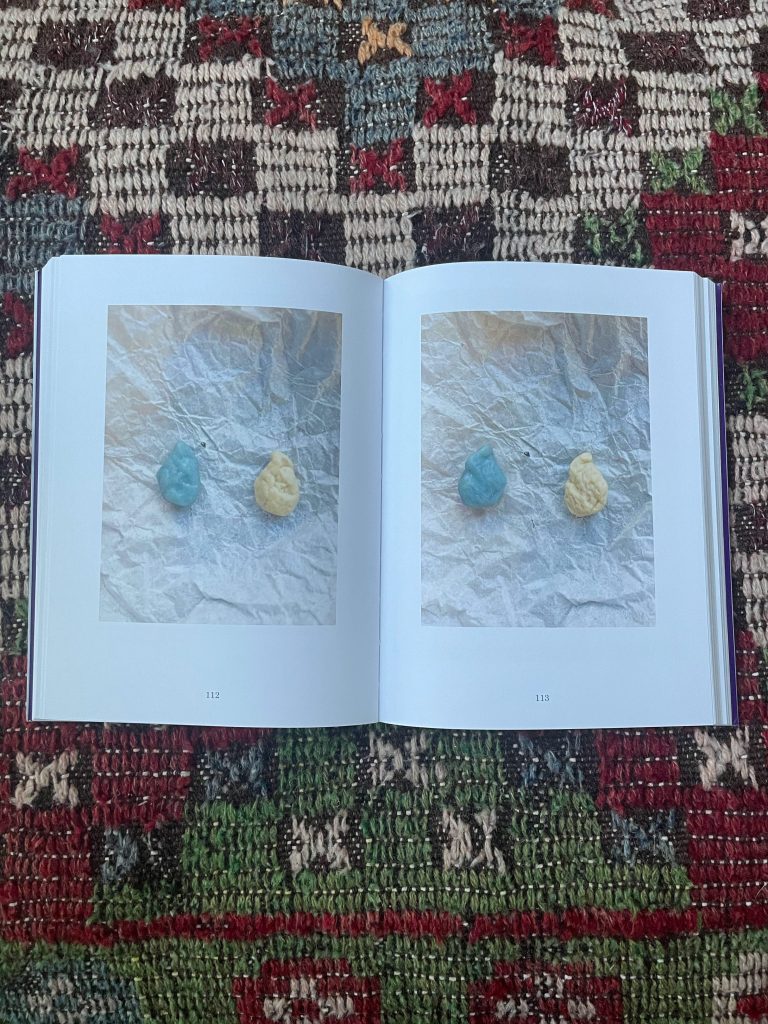
Worrying that the gum may get stolen, or lost, or thrown away by his cleaner, or by his wife, Ellis decides to commission a copy. Tasked with transferring all the gum’s qualities into a cast, the artist opted to make a mould from silicone ‘Super Sculpy’ putty, pressed to the temperature of her hands. A 3D print would have produced a perfect replica, “but”, the artist writes, “that didn’t feel right—too impersonal and dismissive. It somehow reduced the gum to a single element from the many, many things that it was.” Hand pressing the gum gave varied results, cruder than a computer would have been, but the artist was satisfied that something more meaningful than shape had been transferred in the tactile technique of surface touching surface. The gum was subsequently cast in silver and set on a ring, hung from a chain, and worn close to the skin—it makes a beautiful piece of jewellery, but Ellis chose not to “mass-produce the gum”. Wary of “diluting the whole story” by making the gum “readily available”, he prefers “the idea of a sculpture, so people can travel to see it, gather around it, meet in its presence”. The head of exhibitions at the Royal Danish Library in Copenhagen, where the gum was first displayed to the public, writes that “the stories we project onto the object make it glow”. When a curator directs a community to ‘inspire’ one object, that object becomes all the more ‘inspirational’, the glow becomes that much brighter.
We turn to certain objects for the feelings they inspire: a cathedral, a concert hall, a particular patch on the pillow, the coastline, the coffee shop, the person that we love, a park bench, a piece of music, a piece of fruit, a peaceful garden, perhaps a piece of gum. Put together in the proper way, you can build a palace and a pyramid. You can even build a place to put a spirit. But start treating the marble murals as a museum or a marketplace and the spirit will seek more suitable habitation: the feeling will be lost. My mum gave me a book for Christmas—I read a few pages and left it on the windowsill. When my friend gave me the same book for my birthday, I picked up from where I had left off. Nina Simone’s Gum is a book about curation. It asks questions about objects and inspiration. Are there meanings in the materials? Do feelings belong to bodies? Or, have they collected there, the results of concentrated care? Tigers and mountains and Nina Simone seem to inspire awe unprovoked. Chewing gum and churches, however, seem charged by the way they are treated. If an object is lifeless, to say that it possesses a spirit relies on inspiring attention. If its spirit is innate, then the object awaits an inspired attendant. Either way, is the job of the curator to tend both body and soul.
 Holly Tree House
Leave a comment